
EVgo Fast EV Charging Stations
EVgoAuto & Vehicles
4.63.32K Reviews
- Version
- 26.16.0
- Installs
- 1.00M
- Age Rating
- Everyone
Screenshots
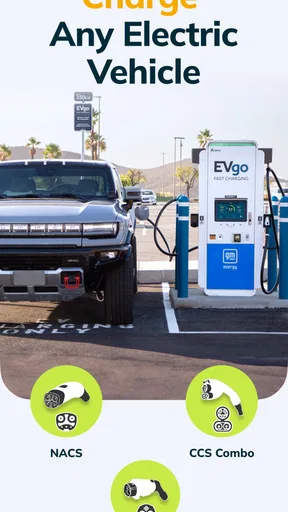
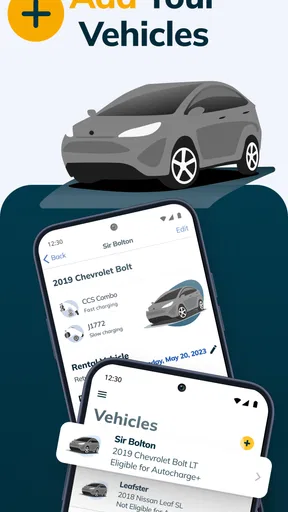
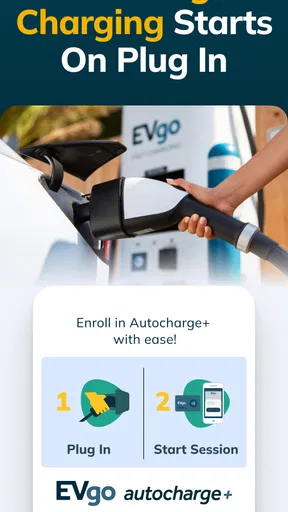
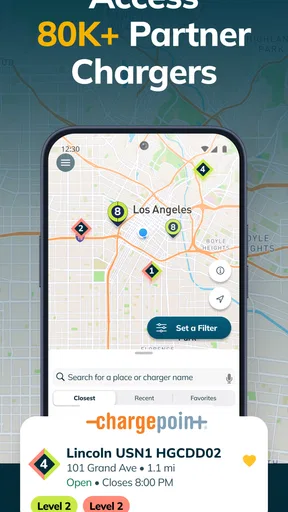
Our Review of EVgo Fast EV Charging Stations
 Analysis by Appyee
When I use an EV charging app, I am not looking for entertainment or a long list of extras. I want to know whether I can find a suitable fast charger, understand where it is, and begin a session without wasting time when the battery is already getting low. That is the practical question behind EVgo Fast EV Charging Stations, an Auto & Vehicles app from EVgo.
My overall impression is that it is most useful for drivers who regularly depend on EVgo’s charging network rather than treating the app as a universal directory for every possible charging option. It is free, aimed at Everyone, and available for devices running Android 8.0 or later. With a 4.6 average from around twelve thousand ratings and more than a million installs, it has clearly become a familiar tool for a substantial group of electric-car owners.
The app’s purpose is straightforward: help you find fast EV charging locations and charge your vehicle at EVgo stations. That focus is a strength, but it also sets the right expectations. I would not choose it simply because I wanted the broadest possible view of every charging provider. I would choose it when EVgo stations are part of my normal routes and I want a direct way to locate and use them.
How I judge whether EVgo is the right charging app
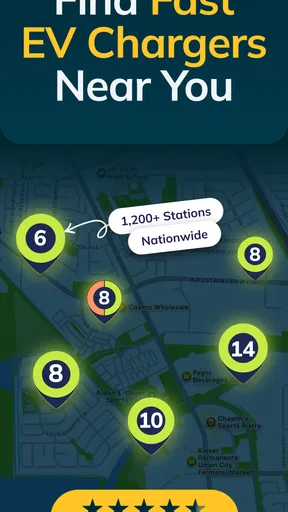
The first decision criterion is coverage that matches real life. A charging app can look polished and still be inconvenient if its stations are not along the roads I use. EVgo presents access to more than a thousand fast car charging stations, so the useful question is not just how large that network sounds. It is whether the app helps me turn that network into a workable stop during commuting, errands, or longer drives.
I also look at how much thinking the app removes from a stressful moment. When I am driving with a low battery, I need more than a map pin. I need to identify an EVgo location, judge whether it is close enough to reach, and decide whether stopping there makes sense for my route. The app is valuable when it shortens that process instead of making me jump between several unrelated tools.
A second criterion is the difference between discovering a station and actually relying on it. A map can show a charger, but a useful charging companion should fit into the next steps of the trip. I pay attention to whether the app feels like a practical route-planning aid or merely a branded map. For EVgo customers, the dedicated focus is more relevant than a generic map result because the app is built around the provider’s own charging experience.
My third criterion is how well the app fits a driver’s habits. Someone who charges mostly at home may open it only before a long trip. A rideshare driver, road-tripper, or apartment resident without dependable home charging may use it much more often. The same application can feel essential to one person and unnecessary to another, even when both drive electric vehicles.
What the app does well for EVgo-focused drivers
The clearest advantage is concentration. Instead of presenting every possible charging brand and leaving me to sort through unrelated locations, EVgo Fast EV Charging Stations keeps its purpose centered on EVgo fast charging. That makes it easier to start with a known network when I already prefer or regularly encounter EVgo stations.
I find this especially helpful when planning around a familiar destination. For example, if I am heading to a shopping area or visiting family in another part of town, I can check for an EVgo stop before leaving rather than waiting until the battery warning becomes urgent. That small change in timing matters: I can choose a charging break that fits the trip instead of allowing the battery level to dictate the entire route.
The app is at its best when it turns a charging stop into a planned part of the journey. I can think about where I will be, how long I expect to stay, and whether the stop is convenient before I arrive. That is more useful than searching only after I have already reached an uncomfortable battery level.
Another strength is the clear relationship between the app and its developer, EVgo. I do not have to wonder which branded tool is intended for EVgo’s own charging network. The identity is obvious, which reduces confusion for a new electric-car owner who has just started encountering different charging providers.
The app’s free price also lowers the barrier to trying it. I can install it without committing money just to see whether EVgo locations suit my routes. For a driver comparing charging networks, that makes experimentation easier: install the app, examine the stations I would realistically use, and decide whether it deserves a regular place on my phone.
Practical workflows that make it more useful
One useful habit is to check a charging location before the trip rather than treating the app as an emergency button. I would first look at the route I expect to drive, then identify an EVgo station that falls naturally near a planned stop. This is particularly sensible for unfamiliar areas, where a charger that appears close on a map may be awkward to reach from the actual road.
A second habit is to separate “possible stop” from “best stop.” The nearest result is not automatically the most convenient one. I consider whether I will already be passing that area, whether the stop interrupts the trip, and whether I would rather charge during a meal, shopping visit, or short break. The app helps with the network search, but the final decision still benefits from ordinary route judgement.
A third insight is that an EV charging app should be part of a backup routine, not the only thing I trust. Before a longer drive, I would identify a primary EVgo stop and keep another reasonable option in mind. This is not a criticism unique to EVgo; charging plans are affected by traffic, detours, battery consumption, and the practical conditions around a station. The dedicated app is useful, but sensible drivers should avoid building a trip around one unexamined map result.
I would also avoid opening it for the first time when I am already rushed. Installing it before a trip gives me time to understand the layout and decide whether its station information matches my needs. That preparation is more valuable than downloading any charging app at the last minute and expecting it to solve every route decision immediately.
Everyday scenario: the low-battery commute
Imagine finishing work with less battery than expected after an unusually busy day of driving. I do not want to go home first if home charging is unavailable or inconvenient, and I do not want to circle around looking for a station. I would open EVgo, look for a fast charging location that fits my route, and make the stop part of the journey home.
The important benefit in that situation is not simply finding a pin. It is reducing uncertainty. I can make a decision while parked, choose whether the station is worth the detour, and avoid spending the next part of the drive wondering where I will charge. If an EVgo location is already near my route, the app becomes a focused solution rather than another source of information to filter.
For a driver who lives in an apartment, travels between cities, or cannot count on a private charger, this workflow can become a regular part of ownership. For someone with a reliable home charger and very short daily trips, the same workflow may happen rarely enough that the app feels optional.
Where broader alternatives can be a better fit
The main trade-off is specialization. EVgo Fast EV Charging Stations is designed around EVgo, while broader charging tools may be more suitable for drivers who want to compare several networks in one place. If my route depends on whichever provider appears first, I would prefer a wider search approach rather than opening a network-specific app and then checking other sources separately.
This matters most on long journeys through unfamiliar areas. A driver may need to compare different charging networks, locations, and route possibilities instead of limiting the first search to EVgo. In that case, a general mapping service or a multi-network charging app may reduce the number of apps involved. I would still keep EVgo installed if its stations are useful, but I would not expect it to replace every other planning tool.
There is also a difference between network loyalty and network flexibility. If I already know that EVgo locations are convenient near my home, workplace, or regular highway routes, the dedicated focus feels efficient. If I move between regions or choose chargers based entirely on immediate convenience, the same focus can feel restrictive. Neither approach is universally better; it depends on whether the network itself is part of my charging strategy.
Another reason to consider alternatives is redundancy. I do not like relying on one app when travelling somewhere new. A broader tool can help me compare options before leaving, while EVgo can remain the more direct choice when I decide to use an EVgo station. That combination is often more practical than insisting that one application handle every part of the trip.
What the rating and platform details tell me
The app holds a 4.6 average across around twelve thousand ratings, with roughly three thousand reviews represented in its store presence. I treat that as a positive sign that many users find the basic experience worthwhile, but I would not read the number as a guarantee that every station search or charging session will feel effortless. Charging apps are judged in real situations, and convenience depends heavily on location and driving habits.
It has been available since August 30, 2017, which gives it a longer presence than a newly launched utility. The current version is 26.10.0, and the minimum operating-system requirement is Android 8.0. Those details are useful for anyone using an older phone, especially if the device is kept in the car as a dedicated navigation or charging tool.
The Everyone content rating also makes the app broadly approachable. I would still pay attention to the normal account and device setup required by any charging service, but the age classification does not create a special barrier for ordinary users. Since the app is free, the real cost of trying it is time: installing it, checking the stations near my routes, and deciding whether its network focus matches my needs.
The cost of switching to a dedicated network app
Switching from a general map to a provider-specific app is not mainly a financial decision. It is a workflow decision. I may need to remember which app belongs to which network, keep more than one charging tool on my phone, and adjust the way I plan trips. That extra mental step is worthwhile only if EVgo stations are genuinely convenient for me.
The benefit is a more direct relationship with the EVgo network. Instead of beginning with a broad list and filtering down, I begin with the provider I have chosen. For regular EVgo users, that can make repeated charging stops feel more consistent. For occasional users, it may be simpler to keep a general charging search tool as the main option and open EVgo only when its stations are the obvious choice.
I would test the switch on ordinary routes first. I might check the app before a commute, an errand across town, and a longer drive. If it repeatedly helps me find useful stops without forcing awkward detours, it has earned a permanent place on my phone. If I continually need another app to compare alternatives, then EVgo is better treated as a supporting tool rather than my only charging companion.
One practical tip is to avoid judging the app after a single search near home. A network may be sparse in one neighborhood and much more useful along the routes I travel most. I would evaluate the locations that matter to my actual routine, not an abstract impression based on one map view.
Who should install it, and who should skip it
I recommend trying it if you own an electric car and regularly see EVgo stations along your commute, shopping routes, or intercity drives. It is also a sensible choice for someone who wants a focused way to plan EVgo charging instead of relying only on general map searches. New EV owners may appreciate the simple connection between the app’s purpose and the charging network it represents.
I would be more cautious if you rarely use public fast charging. A home-charging routine may cover nearly all your needs, making any dedicated network app something you open only occasionally. In that situation, a broader map application you already use could be enough for unexpected trips.
I would also skip making it my sole app if I frequently travel through places where several charging networks compete for attention. A multi-network alternative may fit better because it supports comparison as the starting point. EVgo can still be useful when one of its stations is the best match, but it should not be the only lens through which I plan a complicated route.
My recommendation after using it as a decision tool
EVgo Fast EV Charging Stations succeeds because it stays focused on a real problem: locating and using EVgo fast charging as part of everyday driving. I like it most when I already have a reason to choose EVgo and want a direct, provider-specific workflow. Its free access, broad age rating, established availability, and strong average rating make it easy to try without much risk.
My recommendation is therefore conditional but clear. Install it if EVgo stations are part of your normal driving map; pair it with a broader alternative if you need network comparison. That approach respects what the app does well without asking it to become something it was not designed to be.
For my own use, I would open it before a trip, identify a realistic charging stop, and keep a backup plan for unfamiliar routes. I would not wait until the battery is critically low, and I would not assume the nearest listed station is automatically the best one for my journey. Used with that small amount of planning, the app feels practical rather than merely branded.
In the end, this is a good fit for EV drivers who value a focused EVgo experience. It is less compelling as a universal answer for every public-charging situation. If your routes align with the network, the dedicated approach can save time and reduce uncertainty. If your priority is comparing all available providers at once, a broader charging companion will probably serve you better, with EVgo kept as a useful specialist tool.
Privacy and Permissions
See what permissions an app requests and how it handles your data.
- Location
- approximate location (network-based), precise location (GPS and network-based)
- Photos/Media/Files
- read the contents of your USB storage, modify or delete the contents of your USB storage
- Storage
- read the contents of your USB storage, modify or delete the contents of your USB storage
- Camera
- take pictures and videos
- Wi-Fi connection information
- view Wi-Fi connections
- Other
- view network connections, full network access, run at startup, reorder running apps, prevent device from sleeping, read Google service configuration
Verdict
Strengths of EVgo Fast EV Charging Stations
- Large network of fast-charging stations across many U.S. regions
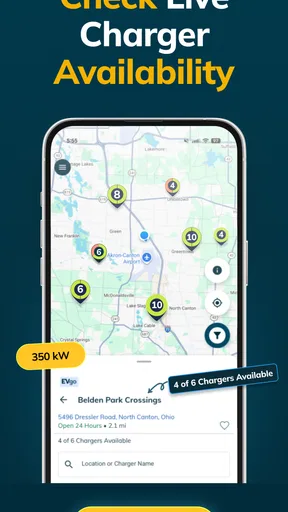
- Live charger availability helps reduce unnecessary trips
- Supports convenient in-app payment and account management
- Offers charging options for different EV connector types
- Station locations often include shops, restaurants, or other amenities
Limitations of EVgo Fast EV Charging Stations
- Charging speeds can vary significantly by vehicle and battery condition
- Busy locations may have queues during peak travel periods
- Some stations have limited parking space or difficult access
- Pricing may be higher than charging at home
- App and station availability depend heavily on regional coverage
Similar Picks in This Category
View All
Android Auto
Google LLC4.1

maxim — order a taxi & food
PT. SITO4.7

Штрафы ГИБДД: проверка с фото
Pays LLC – Штрафы ГИБДД4.7

Номерограм – проверка авто
Авто Ассист4.8

Дром Авто
Дром4.9

Frequently Asked Questions
What is EVgo Fast EV Charging Stations?
EVgo is a public electric vehicle charging network app that helps drivers find, use, and pay for compatible charging stations across the United States. It is mainly designed for DC fast charging, although some locations may offer slower Level 2 chargers. The app provides station details, availability information, pricing, navigation, and account tools for managing charging sessions.
Which electric vehicles are compatible with EVgo chargers?
EVgo supports many electric vehicles equipped with common charging standards, including CCS, CHAdeMO, and, at selected locations, NACS connectors for compatible Tesla and other vehicles. Compatibility depends on your vehicle model, connector type, and the specific station. Before starting a trip, check the station information in the app and confirm that its plug matches your vehicle.
How much does charging with EVgo cost?
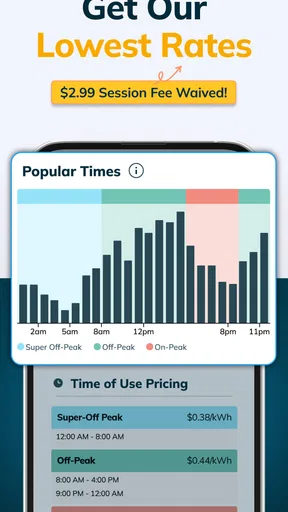
EVgo pricing varies according to the station, location, charger speed, time of use, and your membership plan. Some stations charge by the kilowatt-hour, while others may use time-based pricing or add session-related fees. The app normally displays pricing before you begin, but rates can change, so reviewing the current cost at the selected charger is recommended.
How do I start and stop a charging session in the EVgo app?
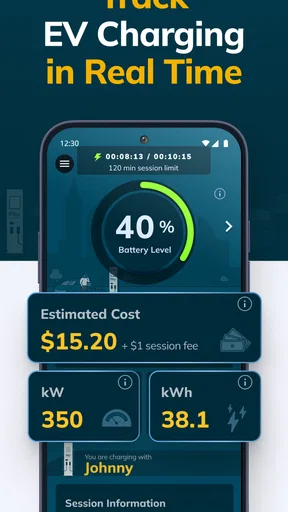
After signing in and adding a payment method, you can use the app to locate a station, select an available charger, and begin a session by following the on-screen instructions. Depending on the location, you may also start charging with an EVgo card, a supported vehicle feature, or another accepted payment method. Stop the session through the app or charger screen when finished.
Does EVgo show real-time charger availability and station information?
The EVgo app provides useful station information such as location, connector type, charging speed, operating status, pricing, and reported availability. This can make route planning easier, but availability may change quickly when another driver arrives or a charger becomes unavailable. For busy areas or long journeys, checking the station shortly before arrival and considering a backup location is advisable.
